AirWave
A catalytic converter for roasting
A car's catalytic converter breaks down engine exhaust before it leaves the tailpipe. AirWave does the same for roast smoke: hydrocarbons and carbon monoxide go in, carbon dioxide and water come out.
Run its outlet duct to an open window and you can roast in an apartment, a coffee shop or a sample room, with no hood and no hole in the wall.
SCA Best New Product, World of Coffee Geneva 2025

NovaCat catalyst
Made for roast smoke
Car catalysts are built for hot, steady engine exhaust and need more than 400 °C to work well. Roast smoke is cooler, comes in bursts, and is mostly hydrocarbons and carbon monoxide. NovaCat, the catalyst in AirWave, was developed with a university research team for that smoke and starts converting from 200 °C.
NovaCat 0%
Car-type catalyst 0%
Hydrocarbons are most of what you smell in roast smoke, and the harder part to break down. At 250 °C, where AirWave runs, NovaCat converts more than twice as much as the car-type catalyst.
| Car-type catalyst | NovaCat | |
|---|---|---|
| Starts converting | Above 400 °C | From 200 °C |
| Made for | Engine exhaust | Roast smoke |
| Works best with | Hot, steady exhaust | Smoke that starts and stops with each batch |
| Honeycomb | Ceramic, slow to heat | Metal, quick to heat |
Lab test: share of each gas converted at each catalyst temperature, NovaCat against two car-type three-way catalysts sold on the open market. The car-type lane shows the better of the two.


Insulated case
Silverskin trap
NovaCat catalyst
Blower
100 mm outlet
Screen and knob
Inside AirWave
Hot inside, safe outside
The chamber runs at 250 to 300 °C and reaches 400 °C when it cleans itself. Insulated walls keep the case comfortable to touch, so AirWave can stand on the same table as your roaster. The inlet and outlet still get hot.
Chaff stops here
A magnetic mesh trap catches silverskin and anything larger than 300 microns before it reaches the catalyst. Lift it out, rinse it, let it dry, and put it back.
Smoke in, CO₂ and water out
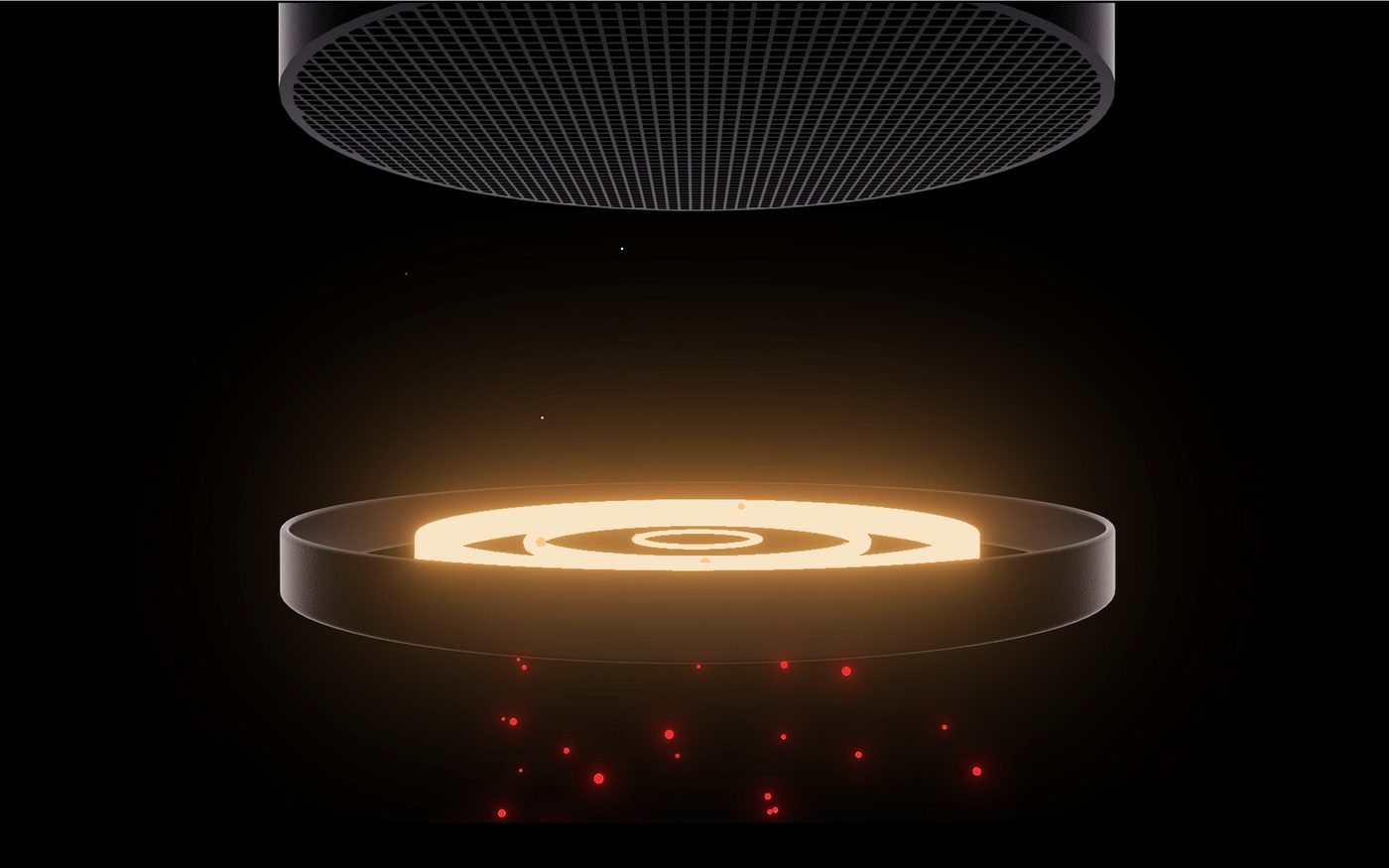
A metal honeycomb coated with precious metals and transition metal oxides. Hydrocarbons and carbon monoxide react on its surface and leave as carbon dioxide and water vapor. It collects nothing, so it never fills up. Replace it every one to two years.
Pulls without pushing
Up to 130 m³/h of airflow. With a loose fit at the inlet, AirWave draws smoke from your roaster's exhaust without changing the pressure inside the drum, so your roast curves stay the way you built them.
One duct to a window
Treated air leaves hot through the outlet. A heat-resistant duct from here to an open window or an outside vent is the whole installation.
Everything on one dial
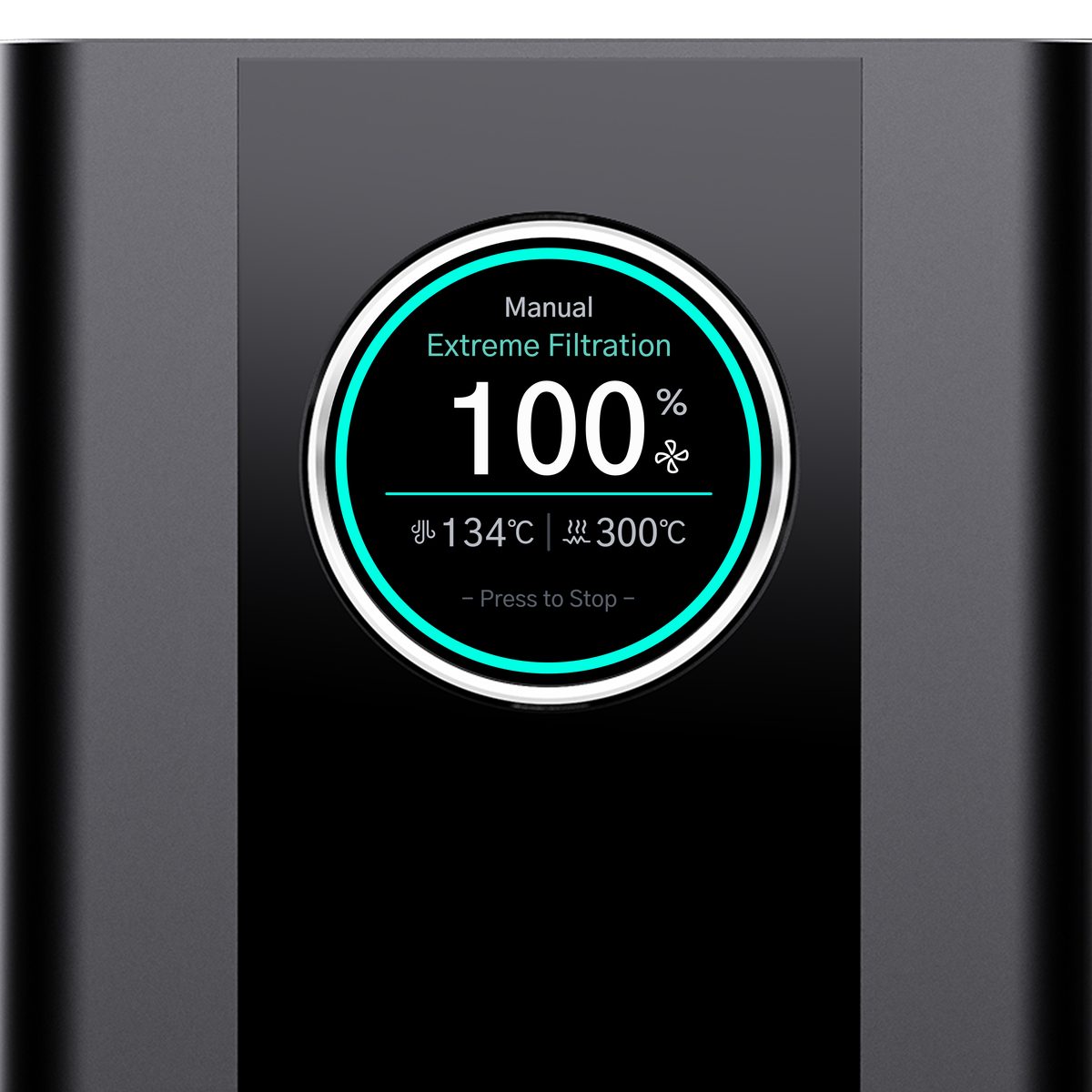
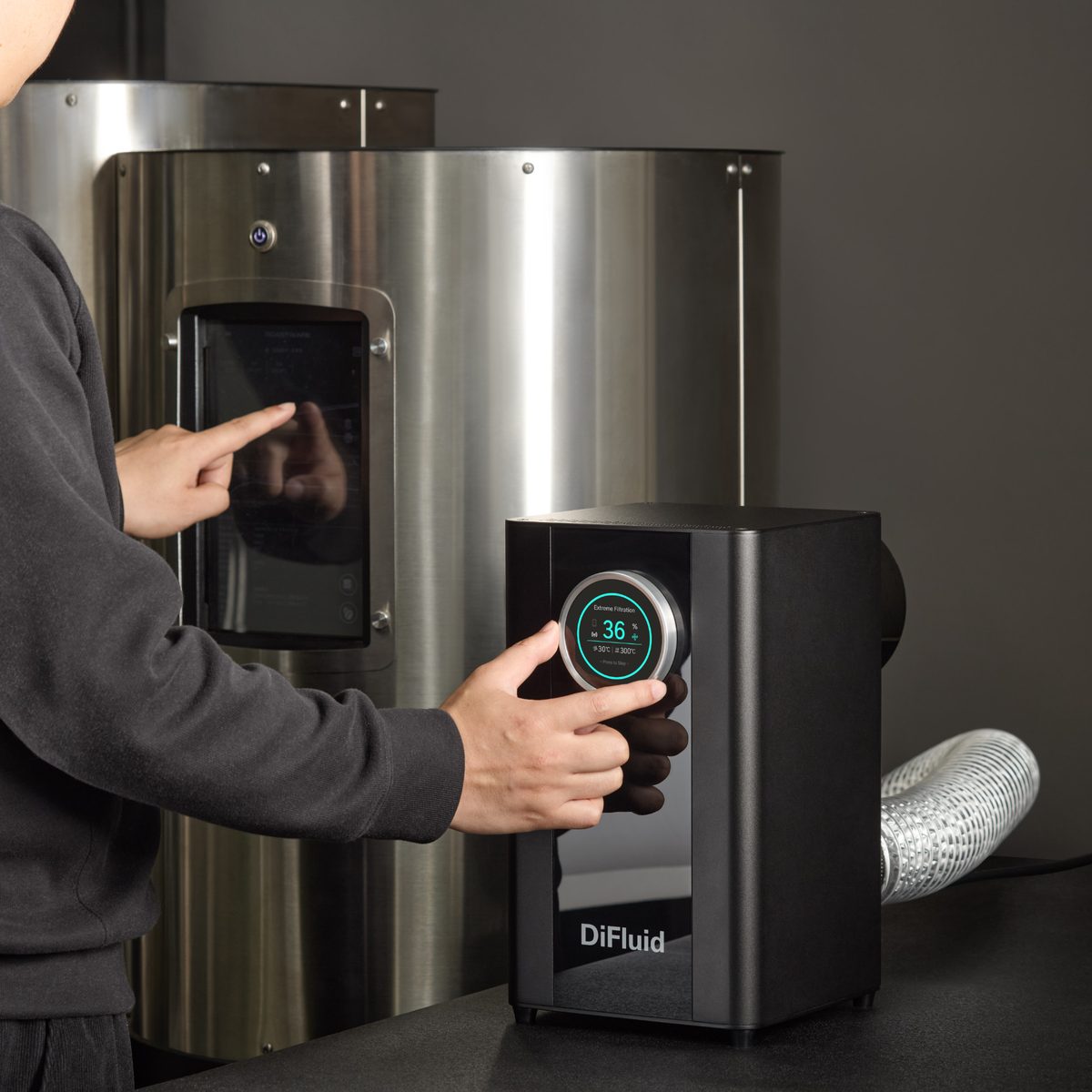
Turn to set airflow, press to start. The screen shows the filtration level, the temperature of the air coming in and the temperature of the catalyst.
Third-party test
99.9% of it, gone
An independent lab sampled roast smoke before and after AirWave and measured 21 volatile organic compounds by gas chromatography and mass spectrometry (standard HJ 759-2023). Their total fell from 323,062 to 338 μg/m³.
Pick a compound
removed
Totals as printed in the lab report.
Setup and daily use
No installer needed
The inlet duct and hose clamps come in the box. For the outlet, add a heat-resistant 100 mm duct long enough to reach your window.
Clamps to your roaster's exhaust
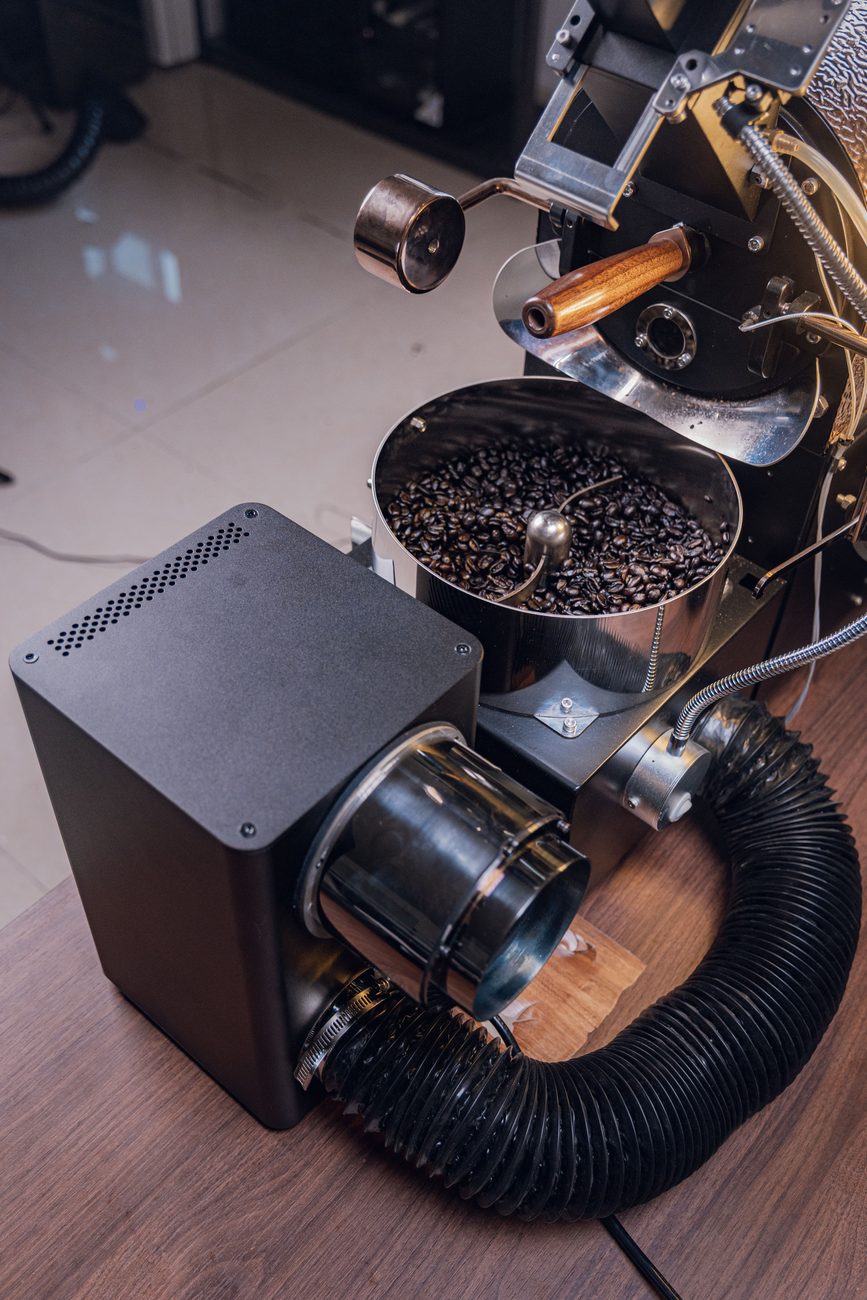
The supplied duct, silverskin trap and hose clamps join your roaster's exhaust to AirWave's inlet. Place the intake over the cooling tray instead and it also takes the smoke from the drop.
- Batches up to 1 kg on the 220 V model, 600 g on the 120 V model
- Rated by the batch you roast, not by your roaster's maximum
- Air at the inlet must be below 120 °C. The supplied duct is heat-resistant to 150 °C.
Two levels, one knob
Standard Filtration heats the catalyst to 250 °C for the lighter smoke early in a roast. Extreme Filtration heats it to 300 °C for the dense smoke before second crack. More airflow pulls harder but runs the catalyst cooler, so turn it up only as far as the smoke needs.
- Paired with OmniFlux, Automatic Mode sets heat and airflow for each roast stage
- Starts in Extreme Filtration at 65% airflow
Out through a window
Run a heat-resistant 100 mm duct from the outlet to an open window or an outside vent. Never join it to your roaster's exhaust or to a flue from a gas appliance.
- The treated air can still carry a faint smell, so it goes outside, not into the room
- Follow your local rules for venting outdoors
It cleans itself
Oil from roast smoke slowly coats the catalyst. About every 50 kg of roasted coffee, Self-Cleaning heats the chamber to 400 °C and burns it off. There are no filters to buy. Rinse the silverskin trap as often as your roaster fills it.
- Run Self-Cleaning only when needed: each cycle wears the heating wire, and a spare is in the box
- Switch off once the catalyst reads below 40 °C
- Replace the catalyst every one to two years
Where it works
Your roaster, your room
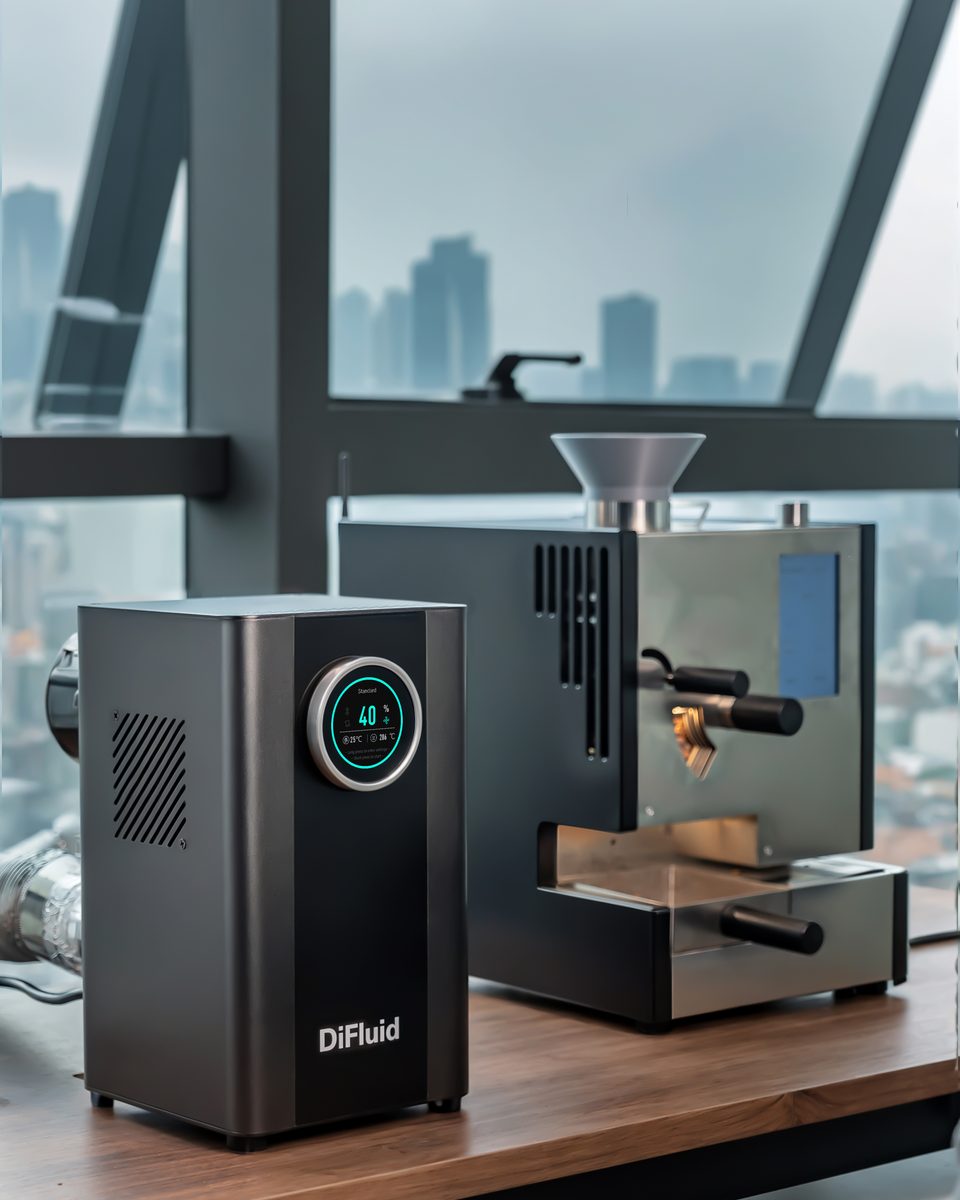
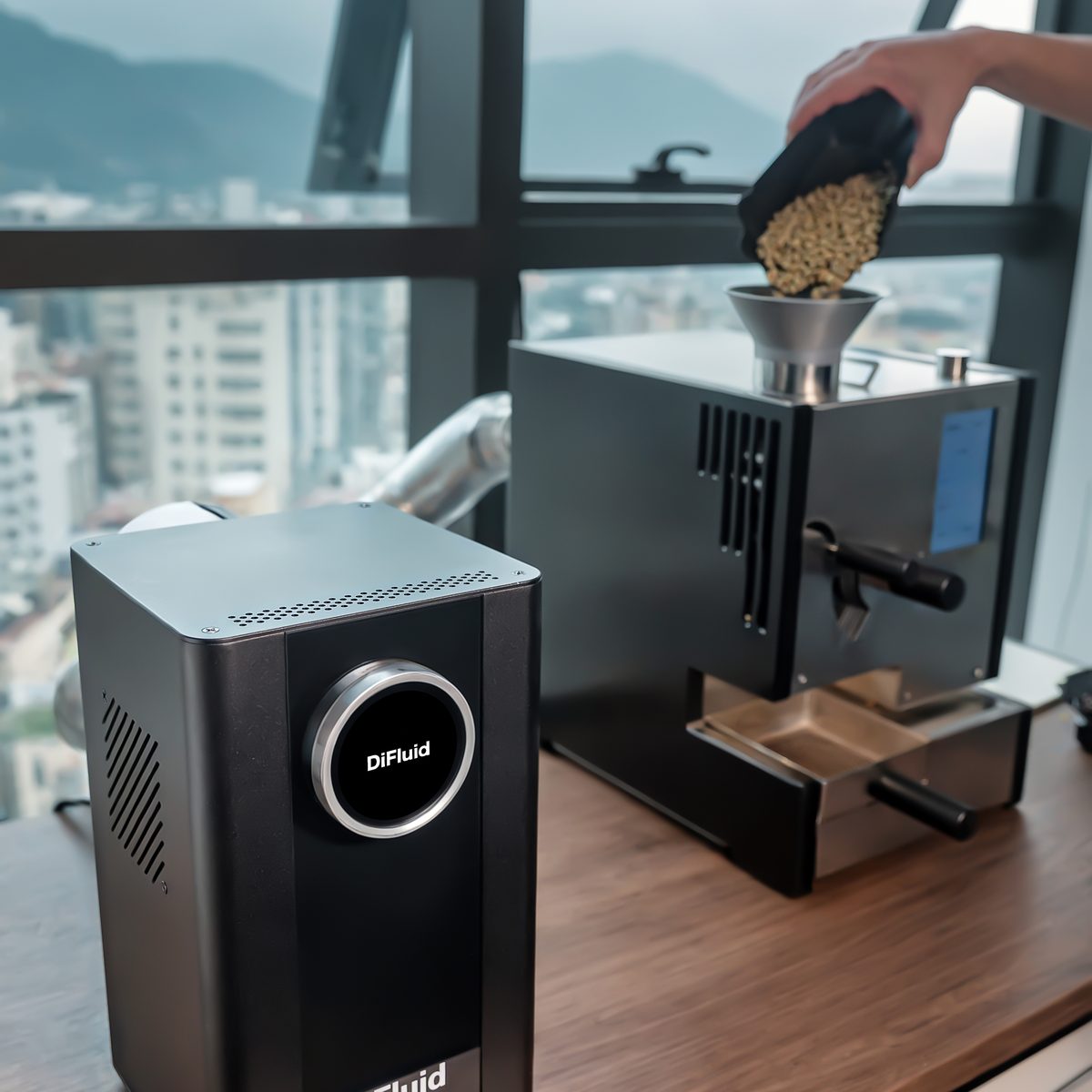
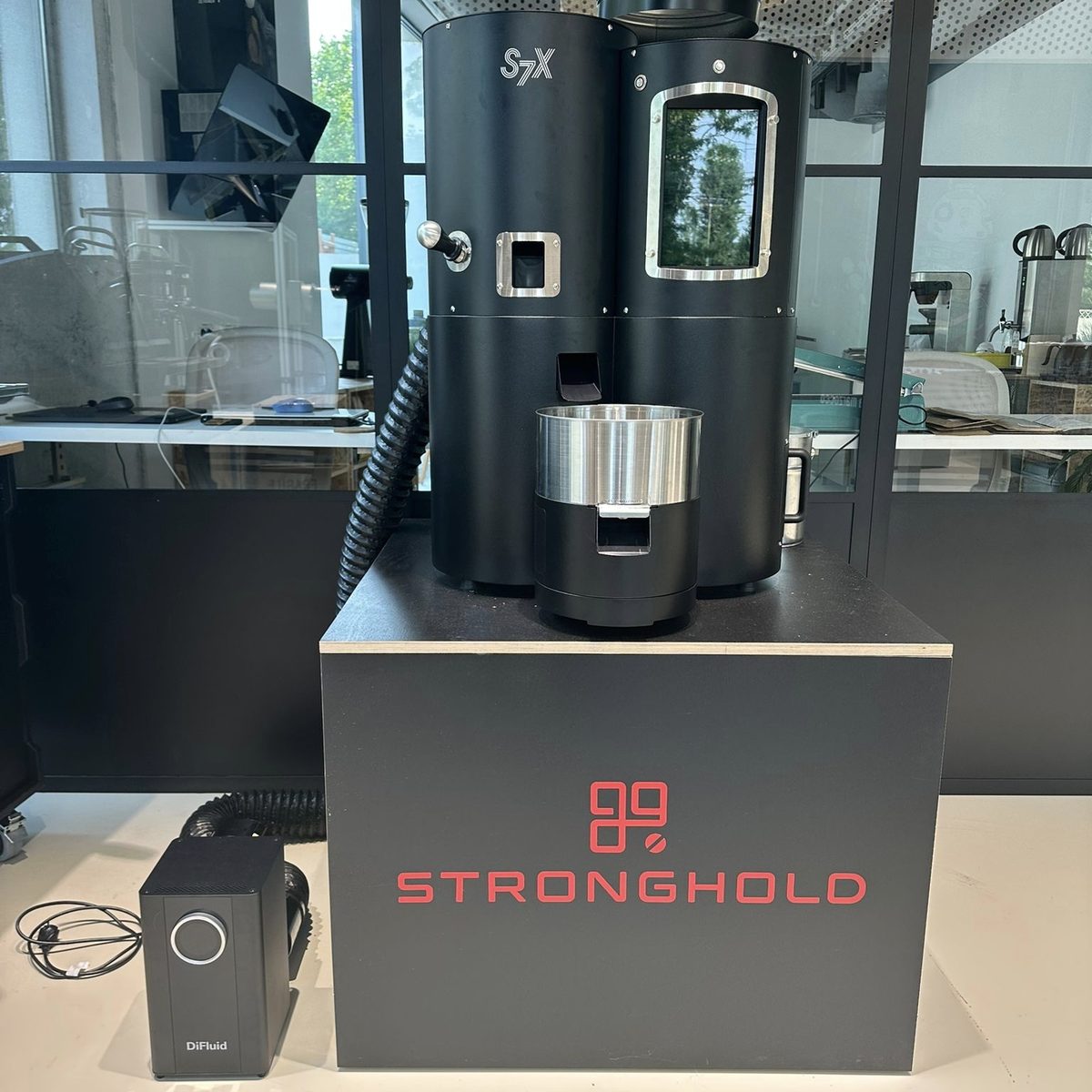
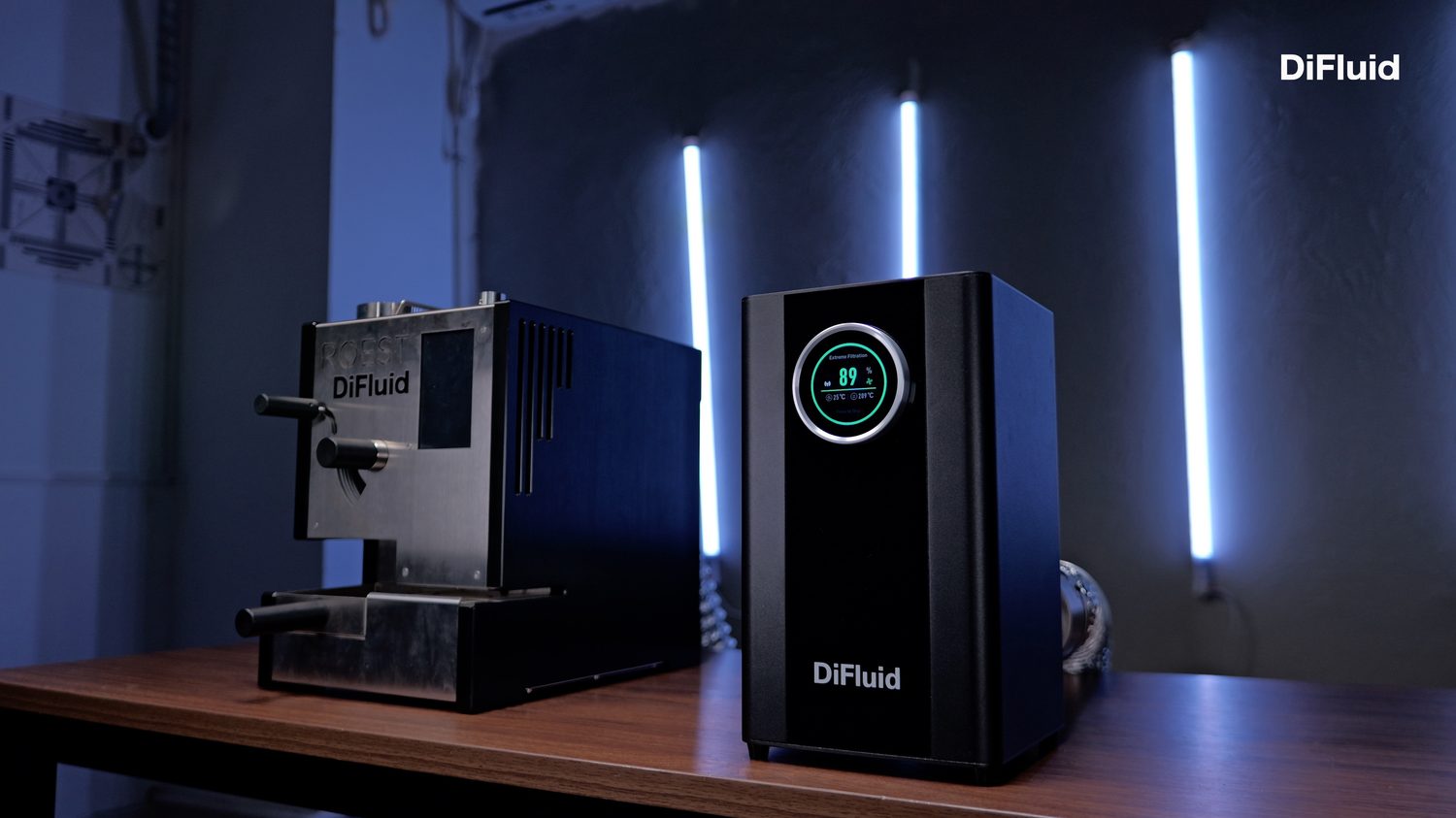
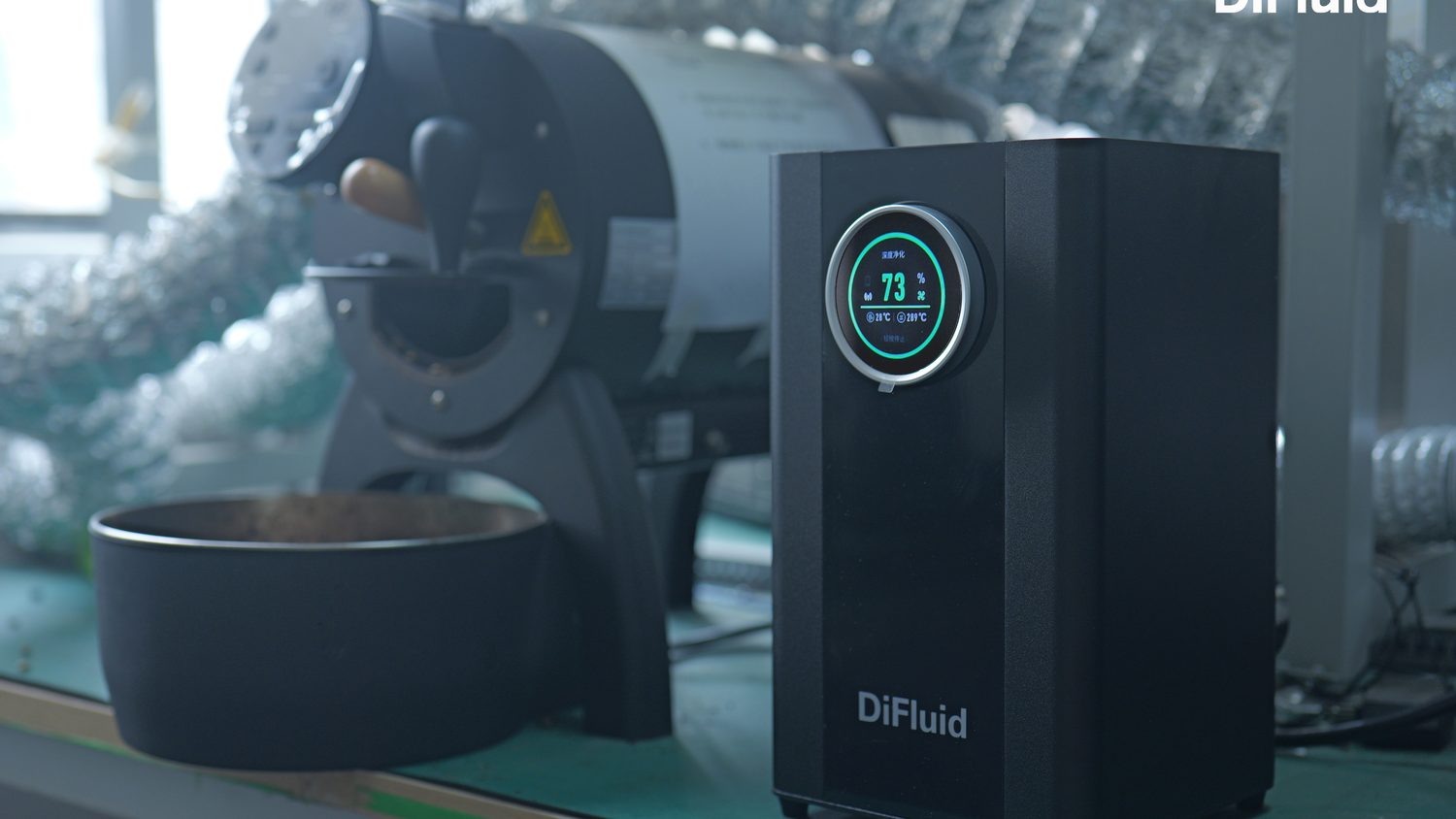
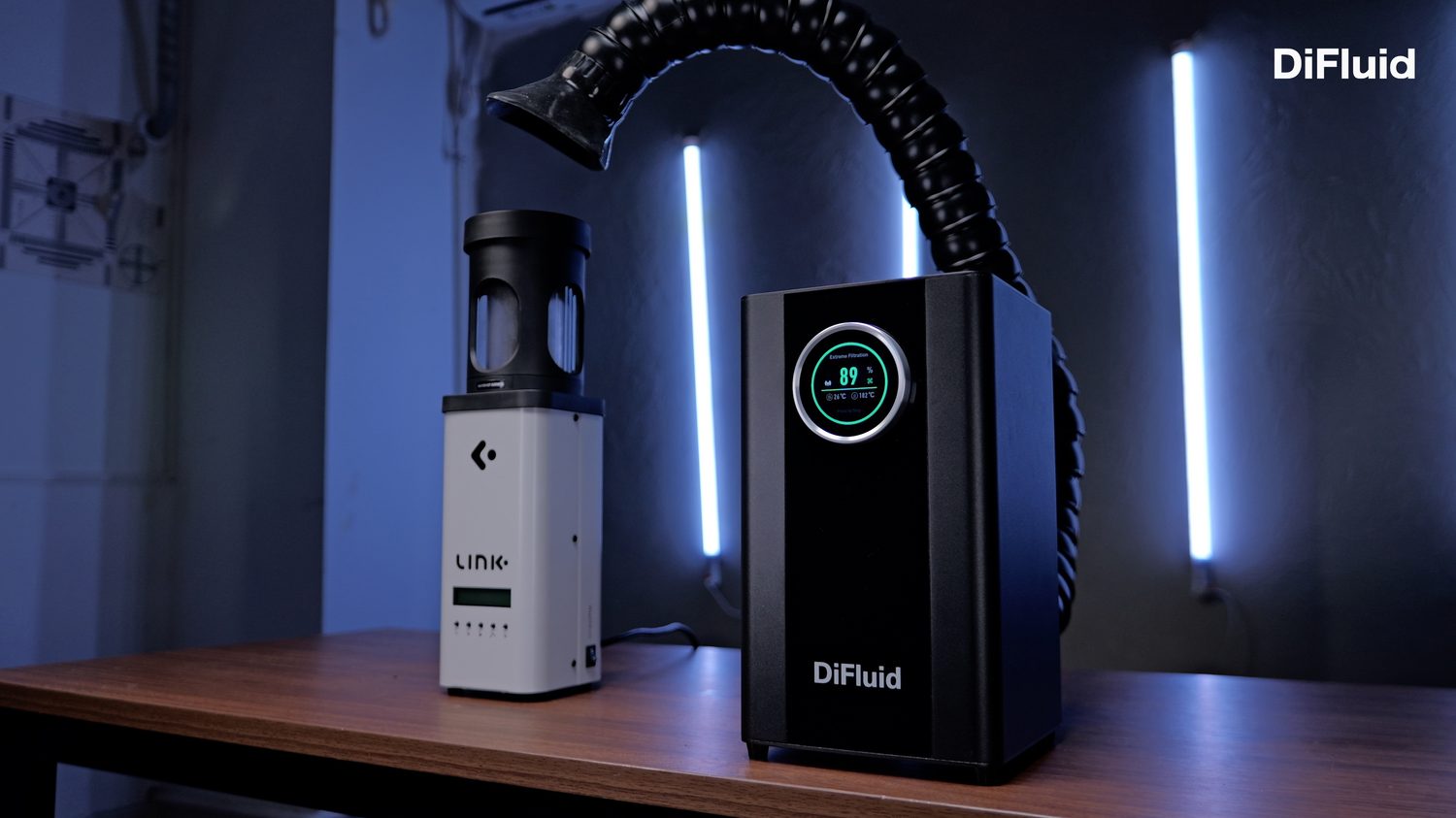
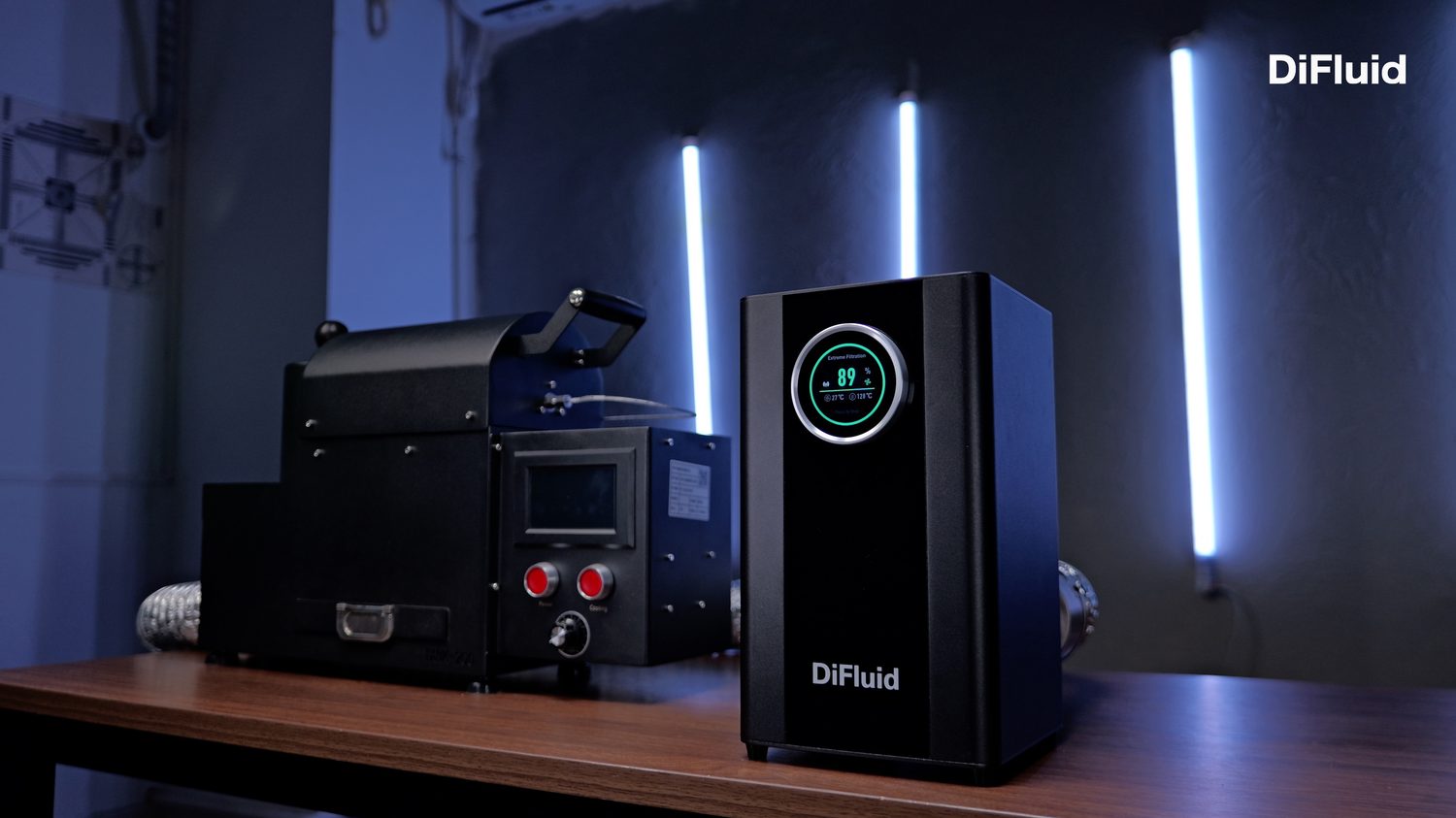
AirWave stands beside your roaster and connects to its exhaust. Here it is with some of the machines and rooms it already works in.
In an apartment
In a shared building, roast smoke travels up stairwells and into the homes around you. With AirWave, what leaves your window is carbon dioxide and water vapor.
In a coffee shop
Roast where customers can watch. With AirWave on the exhaust, the counter smells of fresh coffee, not roast smoke.
In a small roastery
Where a duct run already exists, AirWave fits into it, with its own outlet to the outside. Where none exists, an open window is enough for batches up to 1 kg.
Next to a sample roaster
A sample roaster makes short, dense bursts of smoke, usually in the room where you cup. With AirWave beside it, the cupping table smells of coffee.
With an Aillio Bullet
A favorite of people roasting at home with nowhere to vent. The 220 V AirWave handles its full 1 kg batch. On 120 V, keep batches to 600 g.
Over a Nucleus Link
Nucleus Link is a hot-air sample roaster for 50 to 100 g batches, with no exhaust to clamp a duct to. Hang the end of AirWave's duct just above its chaff collector and AirWave draws the smoke away as it rises.
With a small drum roaster
Side by side on one table, the setup AirWave was designed around. The supplied duct and clamps fit a 100 mm exhaust. For other sizes, use an adapter.
Other ways to clear smoke
Why a catalyst
A filter holds what it catches until it is full. A catalyst breaks smoke down, so the only thing that builds up is a little oil, and Self-Cleaning burns that off.
| Activated carbon | AirWave | |
|---|---|---|
| How it works | Holds odor on its surface | Breaks smoke down into CO₂ and water |
| How long it lasts | 1 to 3 days under roasting loads | Catalyst replaced every 1 to 2 years |
| Heat | Breaks down above about 120 °C | Works from 200 °C |
| Dense smoke | One heavy batch can overwhelm it | Extreme Filtration for the densest smoke |
| Upkeep | New cartridges | Self-Cleaning, no filters to buy |
| Electrostatic | AirWave | |
|---|---|---|
| How it works | Charges particles and collects them on a plate | Breaks smoke down into CO₂ and water |
| CO, formaldehyde and other gases | Pass straight through | Broken down |
| Ozone | Can produce a little | None: 200 to 400 °C is too cool to make ozone |
| Upkeep | Plate cleaning | Self-Cleaning |
Roast Control System
Buy it as a system
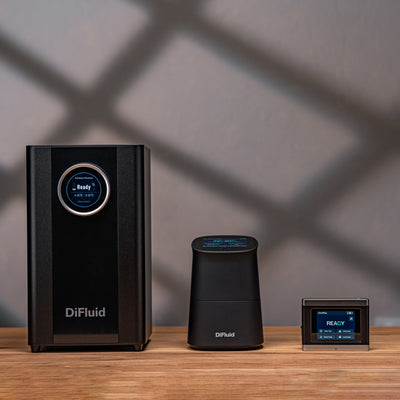
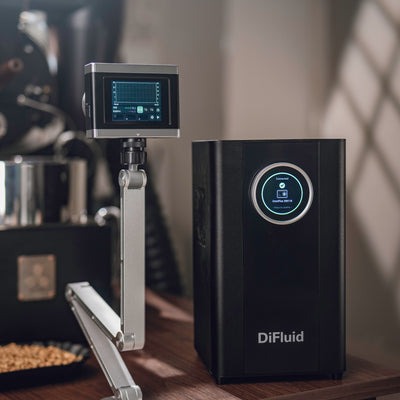
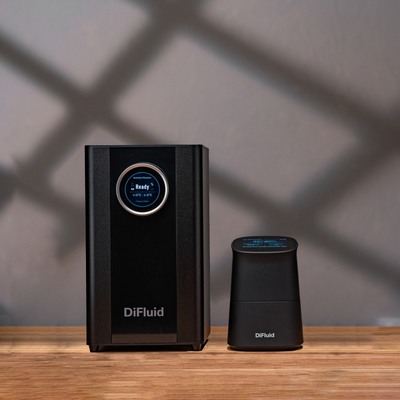
OmniFlux measures roast color in real time so you can Roast by Color. Paired with it, AirWave's Automatic Mode sets heat and airflow for each stage of the roast. Omix Plus measures your green coffee before the roast and your roast color after it. Each system costs less than its devices bought one by one.
AirWave
Specifications
- Model
- DFT-SF101
- Voltage
- 220–240 V, or 120 V
- Power
- 2400 W (220 V), 1800 W (120 V)
- Power outlet
- 10 A (220 V) or 15 A (120 V), not shared with other appliances
- Batch size
- Up to 1 kg (220 V), up to 600 g (120 V)
- Airflow
- 130 m³/h, 80 m³/h with the duct fitted
- Inlet air
- Below 120 °C
- Supplied duct
- 100 mm, heat-resistant to 150 °C
- Filtration levels
- Standard 250 °C, Extreme 300 °C
- Modes
- Manual, or Automatic with OmniFlux
- Self-Cleaning
- 400 °C, about every 50 kg roasted
- Catalyst
- Converts from 200 °C, replace every 1 to 2 years
- Silverskin trap
- Catches particles over 300 microns
- Output
- Carbon dioxide and water vapor, no ozone
- Noise
- Below 76 dB(A)
- Size
- 290 × 181 × 318 mm
- Weight
- 6.9 kg
- Connectivity
- Bluetooth, firmware updates in CoffeeOS
In the box
- AirWave
- Inlet duct, 100 mm
- Silverskin trap
- Hose clamps ×3
- Spare heating wire
- Screws ×6
- Screwdrivers ×3
- User manual and warranty card
- Quick-start QR card
Roast where you live
One-year warranty. Firmware updates through CoffeeOS, free on iOS and Android.