



Particle Analysis Contest Winners Announcement
We’re excited to announce the winners of our Particle Analysis Contest! Thank you to everyone who participated, shared your work, and explored deeper into coffee particle science. We were genuinely impressed by the creativity, effort, and curiosity shown across submissions.
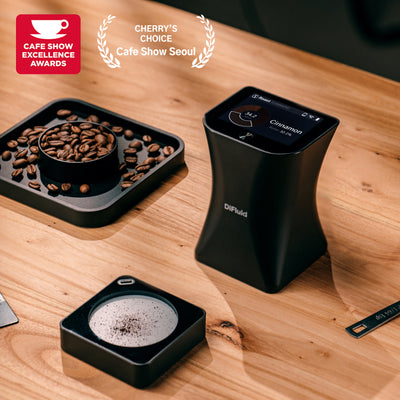
🏆 Grand Prize Winner – DiFluid Omni
Winner: Daryl
📺 Video: https://www.youtube.com/watch?v=zw6Jx8KEiro&t=446s
Daryl’s video submission stood out for its rigorous approach and methodical testing. What made this work exceptional was his understanding of how sampling size affects data:
-
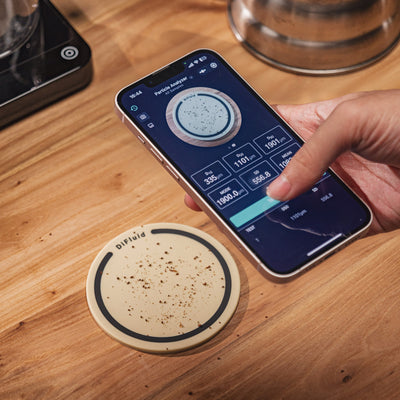
Many entrants took too few samples, which can produce skewed results due to randomness in which particles land on the coaster.
-
Daryl took dozens of measurements and compared them systematically, showing a deeper grasp of experimental consistency and a real desire to learn and refine technique.
One observation from his tests was that some samples were quite densely packed on the coaster, which can make it harder for the algorithm to distinguish individual particles versus clumps. In practice, we recommend using less grounds per coaster and more tests overall to increase accuracy.
Overall, fantastic work, Daryl! This is exactly the kind of effort we’re excited to reward, and we’re glad to upgrade your coffee testing experience with a DiFluid Omni.
🎉 Runner-Up Winners – DiFluid Microbalance
1️⃣ Grinder Comparison – Good effort with room to refine
Reddit post: https://www.reddit.com/r/CoffeeOS/comments/1po8o33/particle_analysis_coaster_grinder_comparison/
This submission compared particle distributions across grinders in a coaster test. Although the number of tests per setting was small—likely affecting the accuracy of results—the effort put into both analysis and discussion is commendable. Particle distributions vary significantly based on roast color, grind setting, and bean density, so getting lots of tests is key to reliable data. We appreciate the work and are glad to award a runner-up prize.
2️⃣ Empirical Study vs Claims –
Great insights on grind theory
Reddit post: https://www.reddit.com/r/CoffeeOS/comments/1pspykt/coffee_particle_empirical_study_vs_claim/
Medium article:
https://medium.com/@arashifibra/claim-vs-empirical-results-for-the-coffee-particle-flat-vs-conical-and-electric-vs-hand-grinder-dc919ea51c87?source=user_profile_page———0———––bbce53fe3989–––––––––––
This entry explored the difference between grind size distribution (D50) and burr gap size, a common area of confusion. Manufacturers often list burr gap because it’s a repeatable mechanical measurement, but it does not necessarily reflect actual particle size distribution, due to particle shape variability and fragmentation. The empirical results presented here—likely more accurate than expected—highlight why real measurement matters, and we appreciated the analytical depth.
3️⃣ Instagram Submission –
Appreciated participation
Instagram: https://www.instagram.com/p/DStKkhmEvnt/
While the particles here were photographed too closely together to give high-reliability data, we still value this entry. The post highlights the potential of easy-to-use coffee analysis tools, and we’re glad to see this kind of experimentation in the community.
📌 Key Learning from the Contest
One thing we noticed from many submissions is that users are not yet fully utilizing the Grinder Manager in CoffeeOS. This powerful feature lets you:
-
Add your specific grinder model
-
Measure particle distributions at all grind settings
-
Build a grind performance curve
-
Save D50 results for each setting
-
Use real measured values in the Grinder Converter for much more accurate conversions
If you haven’t tried this yet, give it a shot!
🙏 Thank You
Thank you to everyone who participated in this contest. The energy and effort from this community continues to inspire us, and we hope you’ll join in future challenges. Stay tuned for more opportunities to learn, test, and grow together!
