Our story

Quién es DiFluid
DiFluid fue fundada por Linus Peng, un emprendedor que dejó su doctorado en la Southern University of Science and Technology con una idea sencilla pero ambiciosa: poner precisión de laboratorio en manos de cualquiera con la curiosidad suficiente para usarla. Cuando particulares, pequeños tostadores y cafeterías independientes pueden medir y compartir datos de la misma calidad que los grandes del sector, toda la industria aprende más rápido.
Digitize Fluid
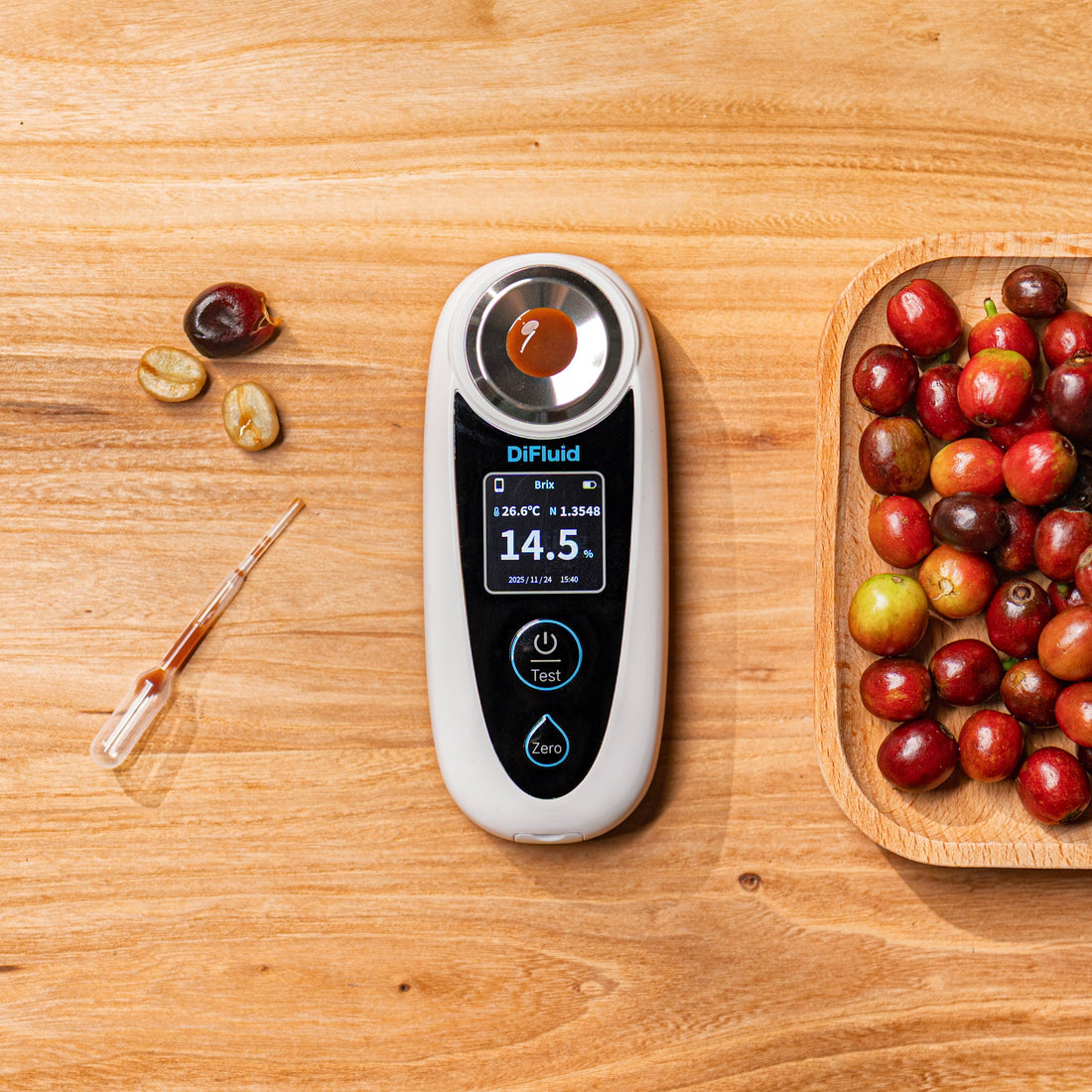
In 2021, R1 came in more than one color. Linus made a version for each liquid he wanted to read: fruit juice, honey, milk, coffee, even wastewater. DiFluid wasn't a coffee company yet. The name came from a much wider idea, Digitize Fluid: turn the changes you can't see inside a liquid into numbers you can read and compare.
Linus was working on a PhD at Southern University of Science and Technology at the time. With a background in electronics, optics and physics, he noticed something that didn't add up. Refractometers had been around for decades, yet the technology inside them, and the experience of using one, had barely moved. Buyers were stuck choosing between a high price, limited precision and awkward handling. He knew it could be done better, and built R1.
Where measuring matters most
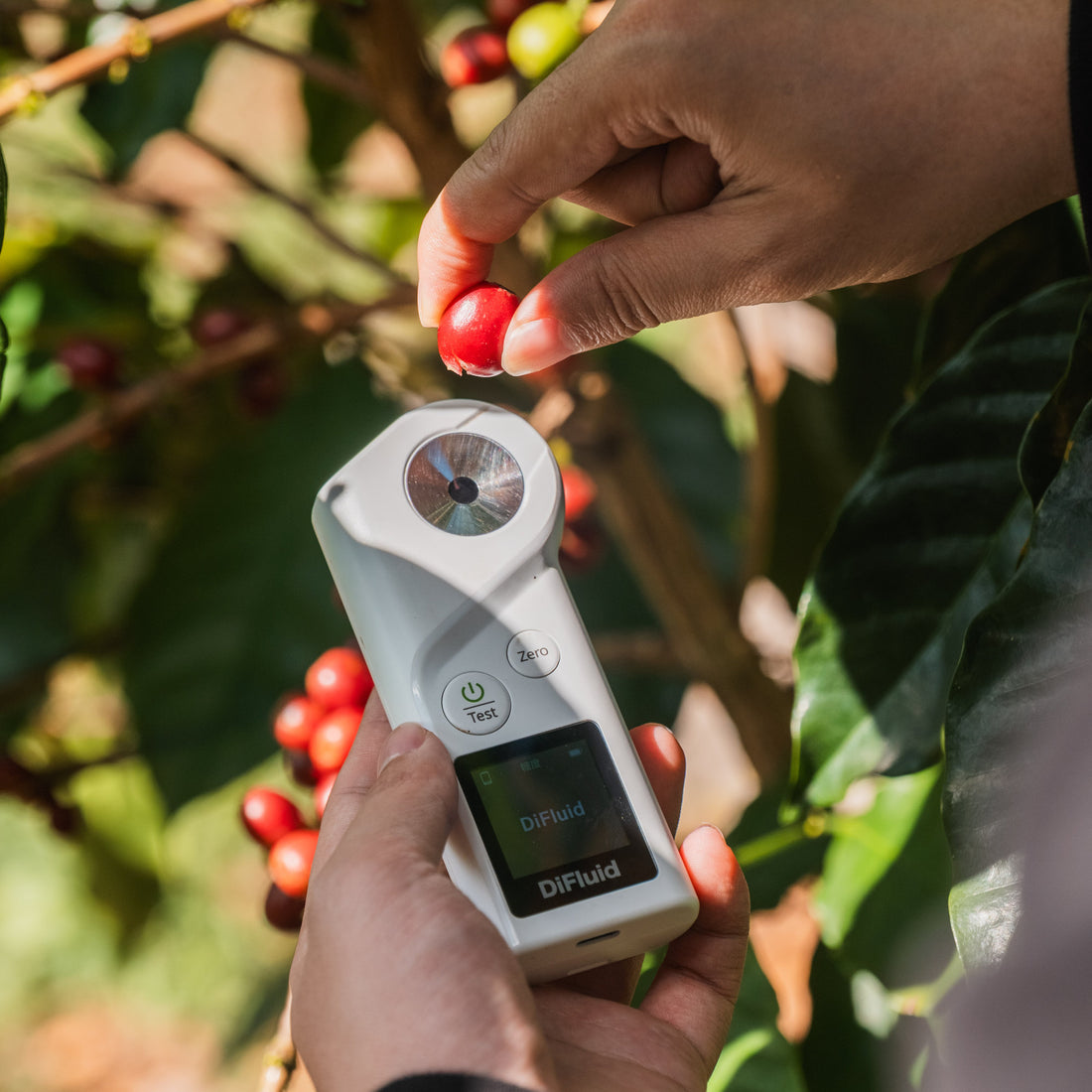
A better device settled how to measure. It left open where measuring mattered most, so Linus went looking across liquids. Fruit was one of R1's first big uses. With a reading of 5% or 14% soluble solids, you know right away: not sweet, or sweet. Useful, and simple.
Coffee was different. Its TDS moves within a narrow range, yet a small shift changes the cup. Concentration, extraction, grind size, water temperature and brew method all pull on each other, so one reading starts more questions instead of settling them. Why do the same beans taste so different? Which step caused it? Can a great brew be understood, compared and made again?
Of everyone using R1, coffee people asked the most questions, and the hardest ones. Their curiosity kept pulling Linus back to coffee, to study how devices, data and taste connect.
Depth over breadth
Linus didn't drink coffee then. What drew him in was how hard its problems were. Over time he saw that measuring more kinds of liquid mattered less than understanding one liquid deeply.
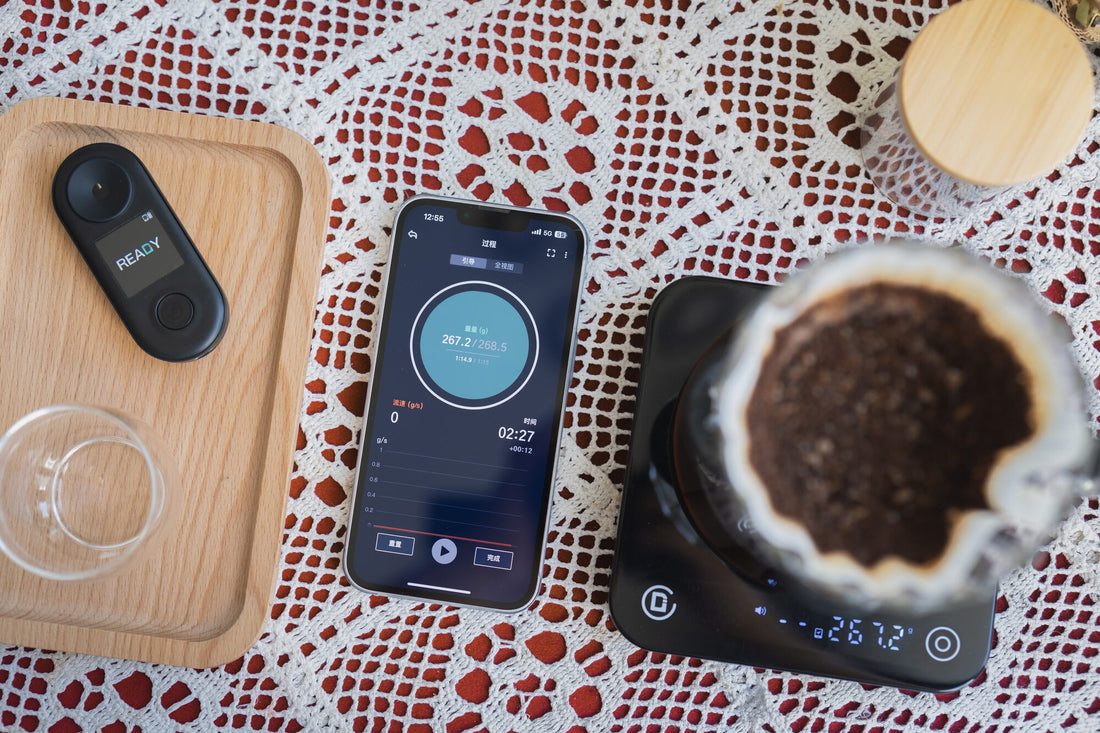
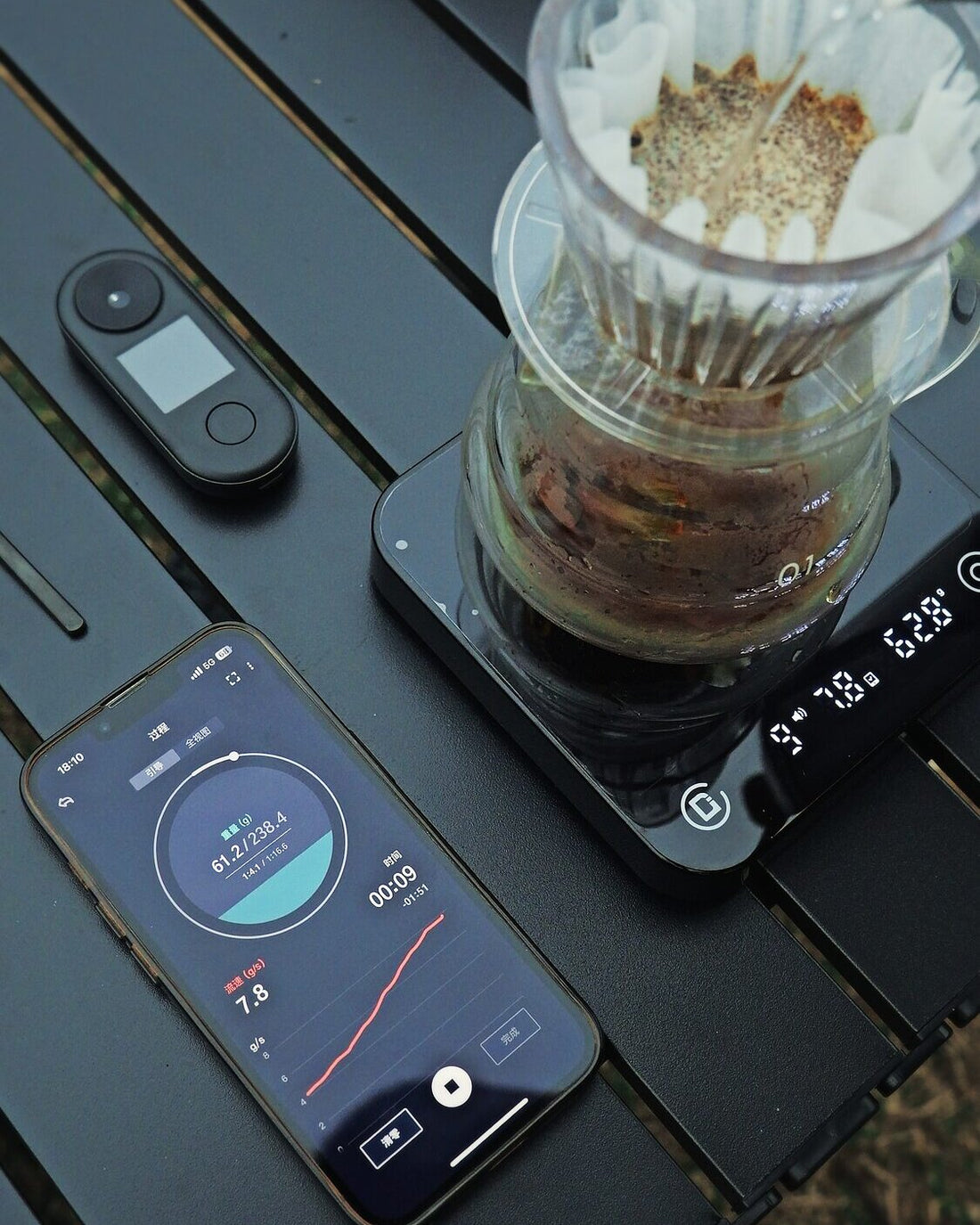
In 2022, DiFluid released R2 Extract, built entirely for coffee. It was more than the next generation of R1. It was a decision: stop making a tool for every liquid, and build a complete way to measure concentration, extraction and brewing. Microbalance followed the same year, taking DiFluid from the result in the cup to the brew that produces it. By the time Omni arrived in 2023, there was no doubt where DiFluid was headed.
For several years, Linus ran his PhD and the company side by side. He left university only once the products, the users and the direction had all proven themselves.

What coffee gave back
Coffee changed Linus too. The founder who didn't drink it became a devoted coffee lover. Through DiFluid he met coffee professionals and friends around the world, and in cafés from city to city he tasted countless ideas of what coffee can be.
DiFluid's direction was never fully written at the start. It was there in the many colors of the first R1, in the questions users kept asking, and in the moment Linus chose depth over breadth.
El ecosistema
Los datos del café están fragmentados a lo largo de la cadena de valor. Productores, importadores, exportadores, tostadores, dueños de cafeterías, baristas y consumidores usan plataformas, herramientas y métodos distintos, lo que hace que estandarizar sea extremadamente difícil.
DiFluid busca resolverlo con una cadena vertical de hardware interconectado y un sistema operativo robusto.
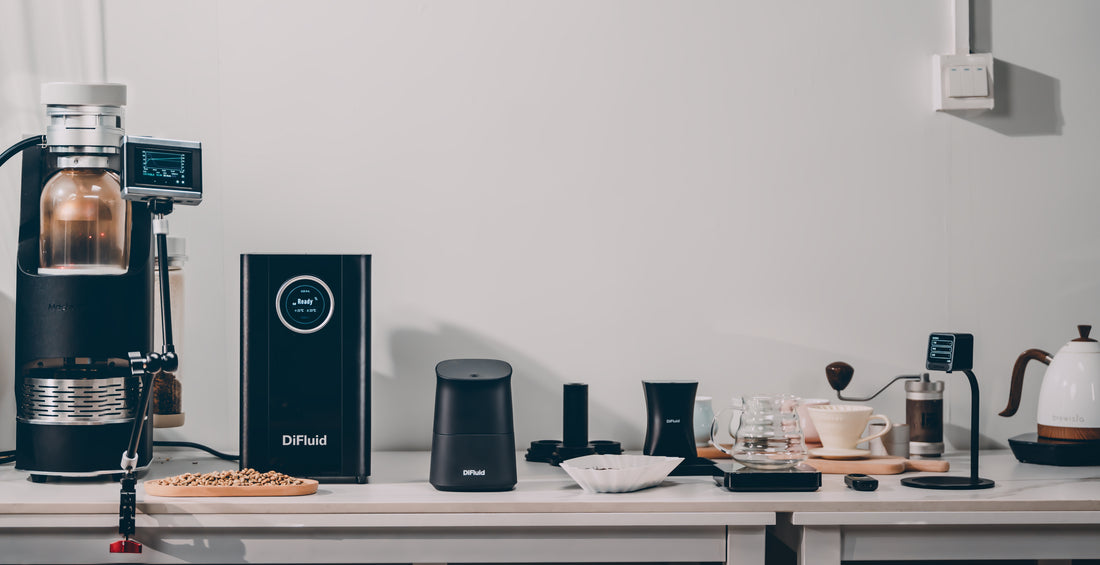
Measure for clues. Taste to decide.
A cup of coffee is shaped by origin, roasting, grinding, water, equipment, environment and brew method. Through years of tasting and practice, coffee professionals learn how each one shows in the cup. Yet much of what matters can't be seen, and hard-won experience is difficult to record, compare and pass on.
A number means something only next to the conditions, the process and the taste behind it. Each DiFluid device makes one part of coffee visible: concentration, extraction, particle size, roast color, moisture, temperature. CoffeeOS connects them, so every measurement, tasting and brew becomes something you can compare, share and build on.
We don't decide what good coffee is for you, and we don't replace tasting with data. Whether you're a barista, a roaster or simply curious, DiFluid helps you see what changed, ask sharper questions and trust your own palate.
El hardware
 AirWave
 Omix
 Omix Plus
 Omni
 CoffMeter W1
 CoffMeter A1
 CoffMeter M1
 Microbalance
 Microbalance Ti
 Moment
 R2 Extract
 R1 Extract
 RS Extract
 Particle Analysis Coaster
 Omni-Volto
 OmniFlux
DiFluid ha creado hardware que abarca todo el recorrido del café: desde la medición de humedad, actividad de agua, densidad y tamaño de criba para productores y tostadores, hasta la medición del color de tueste en vivo y en estático y la eliminación de humo para tostadores, y el análisis de tamaño de partícula y las herramientas de concentración para baristas. Y esto es solo el comienzo. Con muchos productos nuevos en desarrollo, todo lo que fabrica DiFluid funciona sobre una misma plataforma: CoffeeOS.
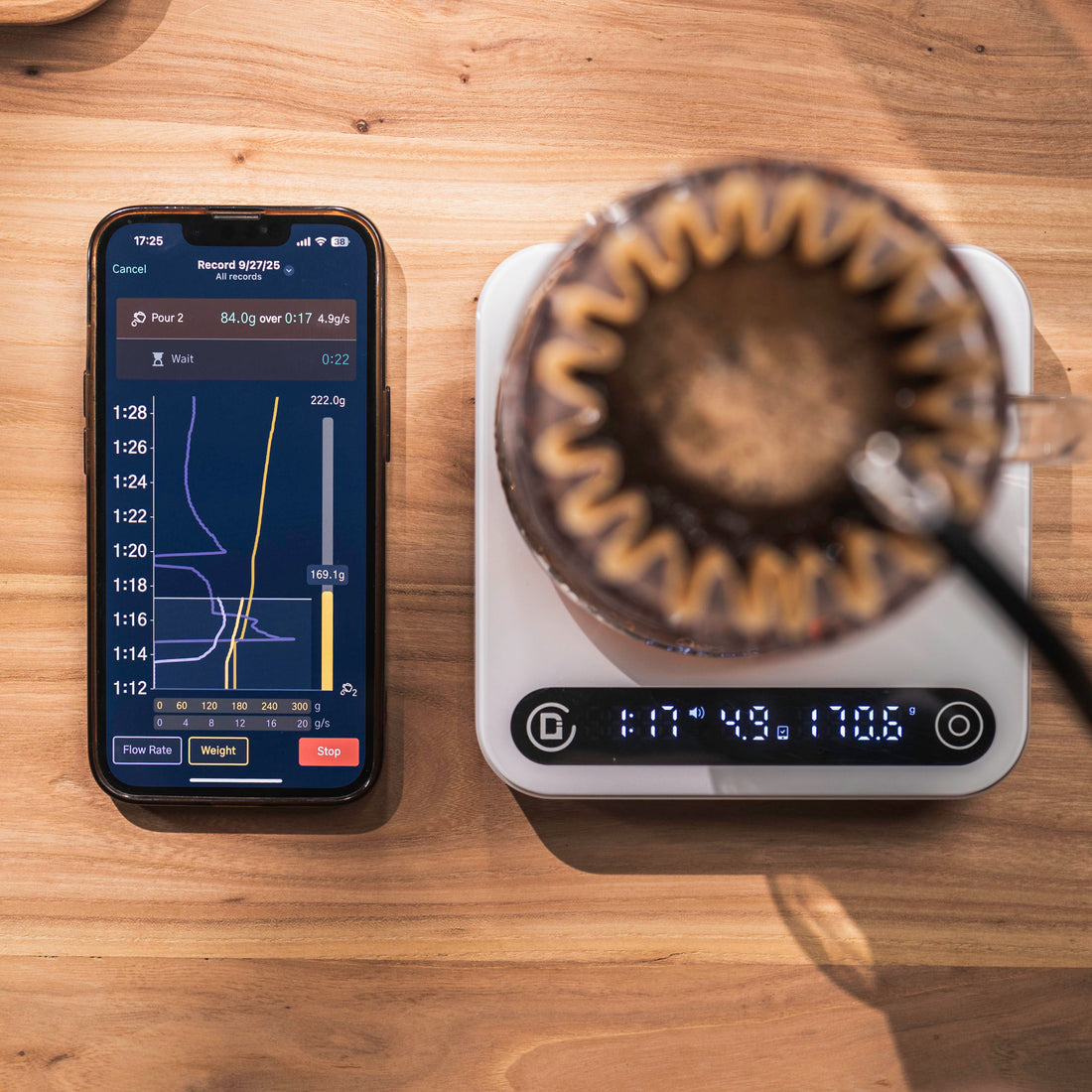
¿Qué es CoffeeOS?
CoffeeOS es una plataforma dedicada que conecta cada etapa del recorrido del café, de la finca a la taza. Diseñada para funcionar sin fricciones con el creciente ecosistema de hardware de DiFluid, reúne cada herramienta, medición y dato en una sola app. No es solo una app complementaria: es un sistema operativo para el café.
R1 gave liquids a language of numbers. Coffee gave those numbers meaning.
Coffee, understood.